

Laundry services
Professional communion dress cleaning
Your communion dress in expert hands. We gently wash, remove stains, and restore the pristine white colour, without risking damage to lace, beads, or sequins. Preserve a beautiful keepsake for years.
A communion dress is more than a garment
It is the costume for the most important childhood photograph. A moment parents remember for years, while the dress often ends up in a closet wrapped in paper, as a keepsake or for a younger sibling.
The problem starts later. Grass stains from the church garden, traces of cake from the celebration, dust from the church floor. Or simply time: white fabric yellows, lace loses its freshness. And then the question arises: wash it at home and risk damage, or entrust it to someone who knows how to handle something so delicate?
Last updated:
Why home washing ruins communion dresses
Embellishment damage
Beads, sequins, pearls, and sewn-on lace cannot withstand mechanical friction in a washing machine. Threads break, decorations fall off, delicate embroidery frays. Intense spinning causes the dress to lose the embellishments its owner remembered from fittings.
Fabric yellowing
The wrong detergent, excessive temperature, or poor storage conditions cause white fabric to turn yellowish or greyish. Tulle, organza, and satin, fabrics often used in communion dresses, are especially vulnerable.
Delicate fabric shrinkage
Tulle, organza, lace, and linings made from different materials shrink at different rates. Home washing machines do not control temperature precisely enough. The result? A dress that puckers, pulls, and loses its shape.
At Gorące Żelazko laundry, every communion dress goes through a 6-step cleaning process with manual stain removal, gentle washing, and shape-forming drying. We secure all embellishments, control every washing parameter, and use products safe for delicate fabrics. That is why we safely wash dresses that a home machine would ruin.
6 steps to a perfectly clean dress
Every communion dress goes through a full professional care process: from embellishment inspection to quality control.
- Step 1
Inspection and embellishment protection
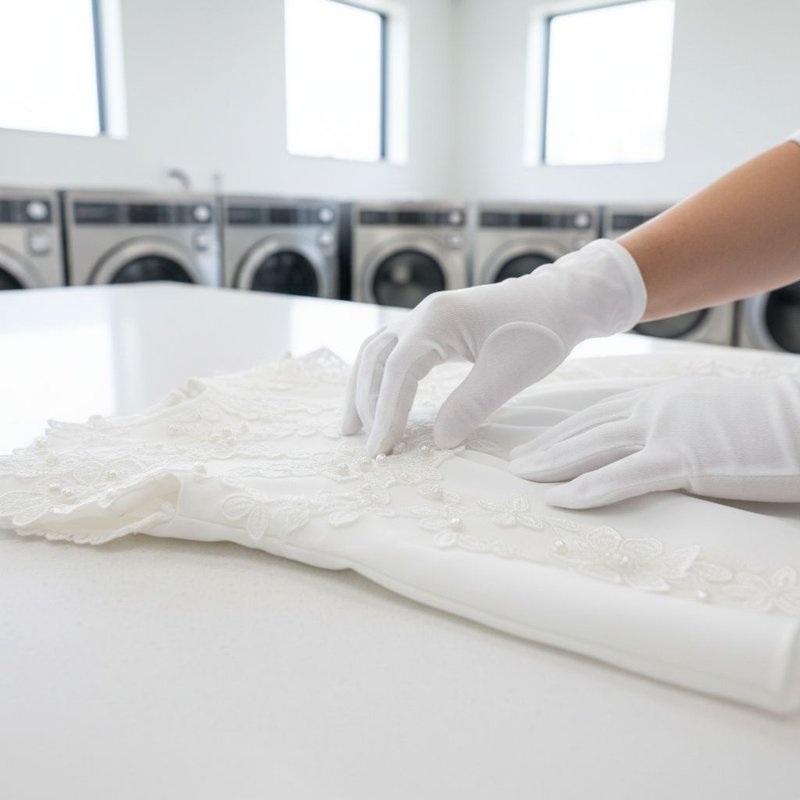
We start with a thorough examination of the dress. We check fabric type, number of tulle layers, and how beads and sequins are attached. We manually secure all loose decorations and reinforce weak threads. We mark stains and decide how to remove them. Each requires a different technique.
- Step 2
Gentle stain removal
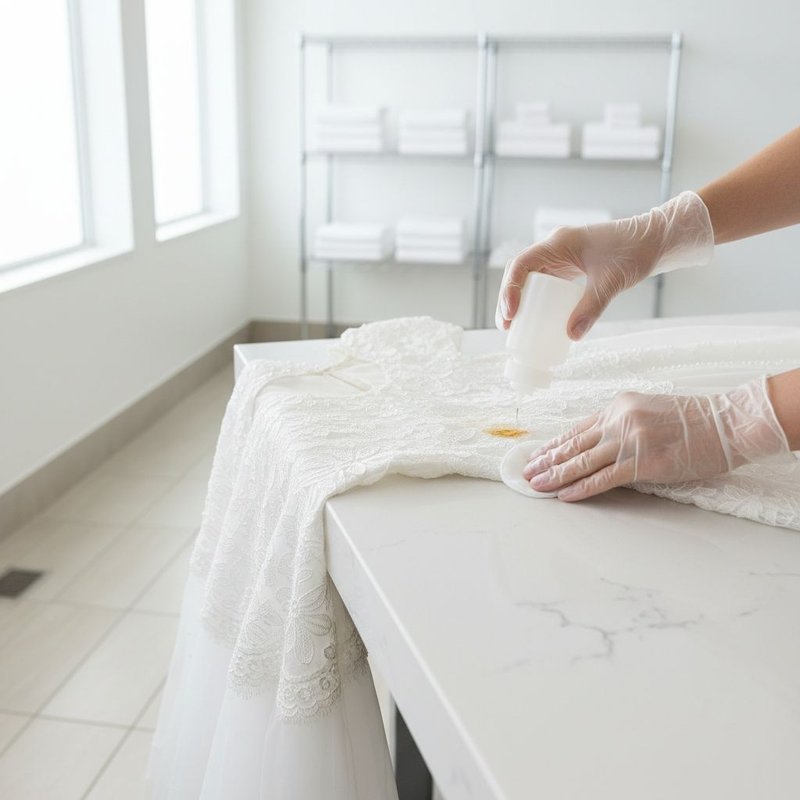
Grass, chocolate, juice, or lipstick stains are removed before washing: spot by spot, by hand, using products matched to the stain type and fabric. We never scrub mechanically. We only gently blot, to avoid damaging the lace or tulle structure.
- Step 3
Hand or delicate machine washing
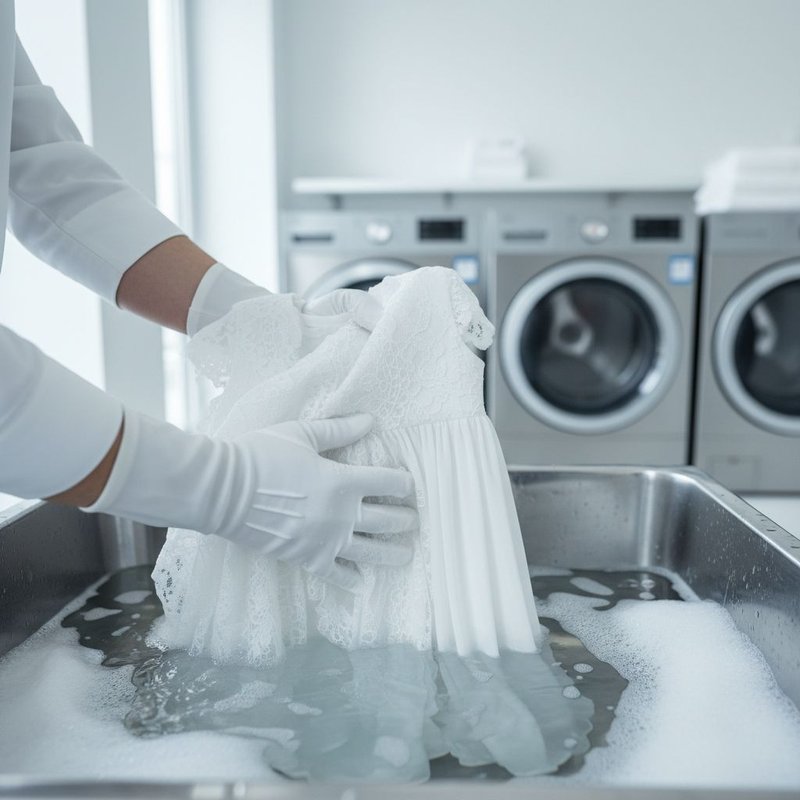
Dresses with many embellishments are hand-washed in lukewarm water. Others go into a professional washing machine in a protective mesh bag, with a delicate fabric programme: maximum 30°C, minimal drum movement, no spinning. We use products for white fabrics without chlorine bleach.
- Step 4
Shape-forming flat drying
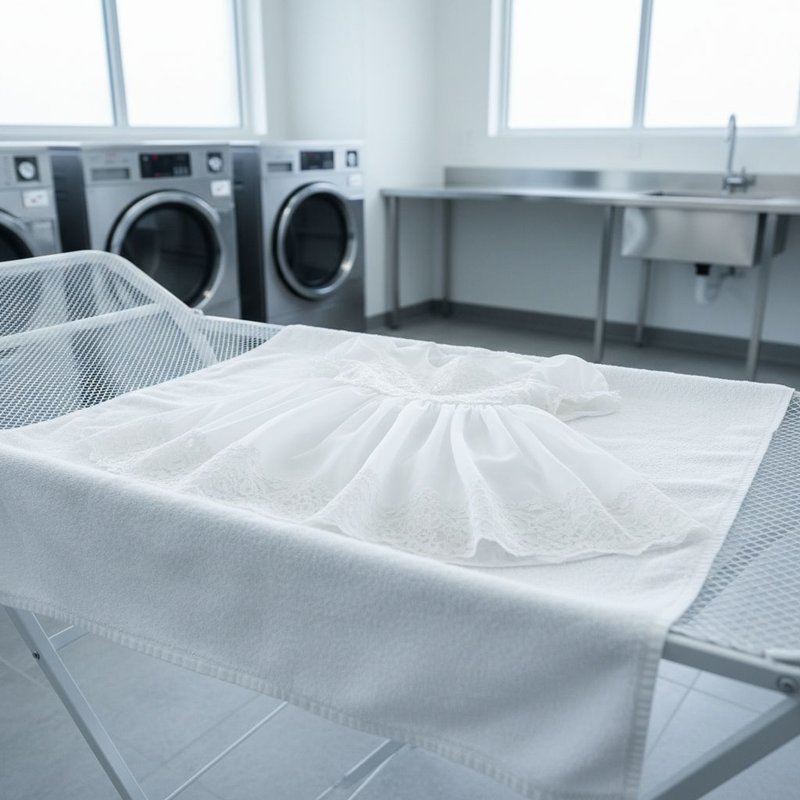
A wet communion dress is heavy and prone to deformation. That is why we never hang it on a hanger. We lay it flat on a special rack with air circulation. Tulle, organza, and lace dried horizontally maintain their shape and volume.
- Step 5
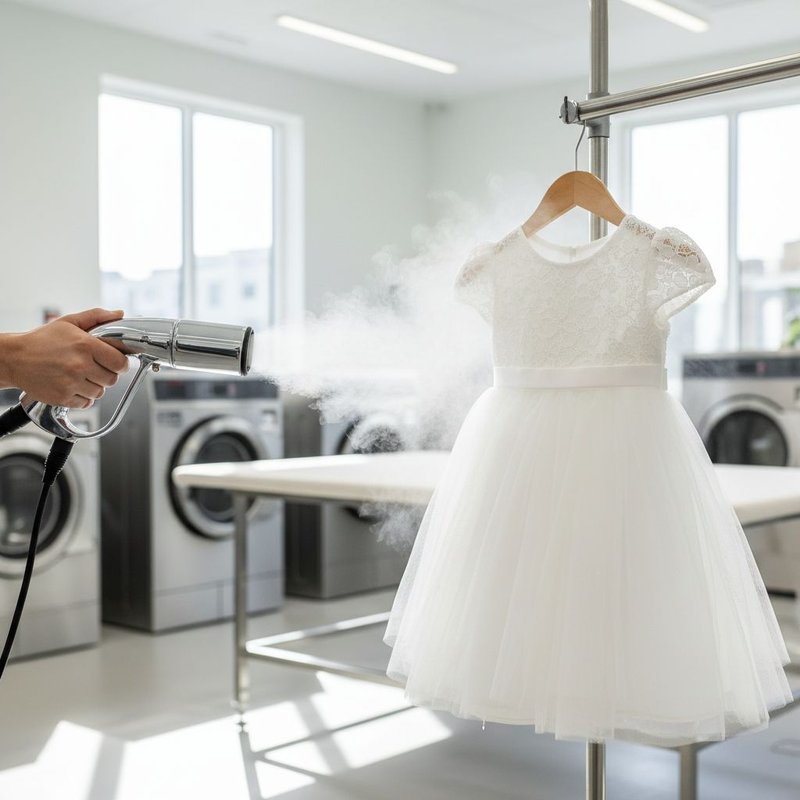
Gentle pressing without shine
We press through a protective cloth or with steam. Never directly. Each layer of tulle, each sleeve and collar separately. Lace is only steamed to avoid flattening its pattern. Satin ribbons are pressed from the reverse side to preserve their sheen.
- Step 6
Quality control and packaging
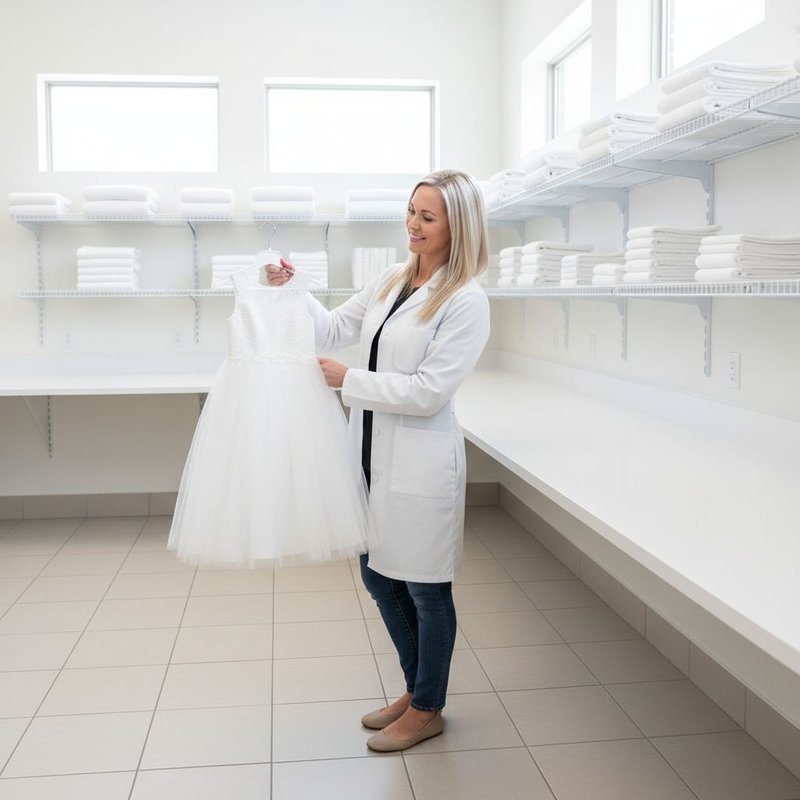
We check cleanliness, fabric colour, embellishment condition, and pressing quality. We pack the dress in a breathable protective fabric cover. If it is intended for storage, we advise on how to fold and where to keep it.


Why parents trust us
Years of experience in professional ceremonial garment care in Lublin.
Ceremonial garment experience
We have been washing communion, wedding, and christening dresses for years. We know how to handle tulle, lace, organza, and delicate embellishments. Each fabric requires a different technique.
Hand care for embellishments
All dresses with beads, sequins, and lace are washed by hand or in protective mesh bags. We never use aggressive detergents or high temperatures.
24-hour express service
Communion in a week and the dress needs washing? We offer an express service with 24-hour turnaround. We pick up and deliver to any address in Lublin.
Quality guarantee
Every dress undergoes a double quality check. If anything does not meet our standards, we fix it at no extra cost. Your dress is as important to us as it is to you.
Professional communion dress cleaning
Full 6-step process: from embellishment inspection to gentle pressing and quality control. Pickup and delivery available in Lublin.
Price from
65 PLNPrice depends on the number of embellishments and level of soiling
See also our other services
What parents say
Google Maps reviews from parents who entrusted us with their children's dresses.
"I brought in the dress two weeks before Communion. I wanted to be sure it would be perfectly white. Not only did they wash it beautifully, but they also fixed a loose pearl and pressed it so well it looked better than in the store. Now I have it stored in a cover as a keepsake."
"After the Communion party, my daughter's dress had grass and cake stains. I thought it would need multiple washes. At Gorące Żelazko they removed everything on the first try. The dress is snow-white again, lace clean, not a single decoration missing. I recommend them to every parent!"
Frequently asked questions about communion dress cleaning
The questions parents in Lublin ask us most - about home washing, temperature, stains and storage.
Can I wash a communion dress in a washing machine?
You can, but it's a gamble. A normal cycle spins and rubs too hard - beads pop off, sequins crack, tulle puckers. If you must use the machine, put the dress in a mesh bag, choose the hand-wash programme, keep water under 30°C and switch off the spin. We play it safer: embellishments are secured by hand, and heavily decorated dresses are washed outside the drum entirely.
What temperature should a communion dress be washed at?
Maximum 30°C, and for delicate tulle or lace, lukewarm hand-washing is better. Higher heat shrinks and yellows white fabric - organza and satin react fastest. Skip chlorine bleach; instead of white you'll get a greyish or pinkish cast. We match the temperature to each layer separately, so the dress keeps its colour and its shape.
How much does communion dress cleaning cost in Lublin?
Communion dress cleaning starts from 65 PLN. The final price depends on the number of embellishments, tulle layers and how soiled the dress is - full embroidery and beadwork take more hand work than a plain dress. We quote after inspection, no surprises at pickup. We also offer pickup and delivery within Lublin and a 24h express option when Communion is near.
How do you remove grass and cake stains from a communion dress?
Don't wash the whole dress before treating the stain. Grass is a dye stain - it responds to alcohol or soap, but hot water sets it permanently. Cake and cream are grease plus protein, so cold first, then enzymes. Never rub - you grind the stain in and damage the lace weave. When in doubt, bring it to us before trying home remedies.
Do you clean communion albs as well?
Yes - we clean communion albs with the same gentle, chlorine-free process; the price is in our list. Yellowing is usually old detergent or sweat rather than dirt, so we refresh the white without harsh bleach. And if you'd rather sort it out in English, that's no problem - we handle enquiries in English and Ukrainian too.
How should I store the dress after Communion?
Wash it first - cake or sweat marks you can't see now turn brown after a few months and won't come out. Then pack it in a breathable cotton garment bag, never plastic, so the fabric can breathe. Keep it dry and out of sunlight. When we return your dress, it comes packed and ready to store - and we'll show you how to fold it.
Entrust your communion dress to experts
Call us or visit us at ul. Wrońska 2 in Lublin. We will pick up the dress and deliver it back clean, pressed, and ready for the big day, or for years of storage.