

Professional washing
Skirt washing in Lublin: pleats sharp as the day you bought it
Wool without shrinking. Silk without water marks. Pleats without compromise. Professional laundry in the heart of Lublin.
That pleated skirt you're afraid to wash
It's been hanging in your closet for two weeks. You wore it to an important meeting, spilled coffee on the knee, and it's just been hanging there ever since. Because the label says 'dry clean only' and you're not exactly sure what that means. What you do know is that your friend threw her pleated skirt in the washing machine and pulled out a flat one.
A home washing machine can't tell silk from cotton. It spins everything with the same force, washes at the same temperature, and pleats? To a machine, those are just creases to iron out. One mistake and a skirt worth 400 PLN is only good for making throw pillows.
Last updated:
What happens to a skirt in a home washing machine
Pleats disappear after a single wash
Spinning too fast in a home machine flattens pleats, and chemically set pleats are more sensitive to this than heat-set ones. A home machine doesn't distinguish between the settings each type needs. The result? A pleated skirt comes back flat. Restoring pleats calls for a specialist press and know-how. Your iron can't do it.
Wool can shrink noticeably
Wool fibres have a scaly structure. The scales open and interlock under a combination of high temperature, mechanical movement in the drum, and the alkaline pH of ordinary detergents, not from hot water alone. That's felting, a process that's practically irreversible: a skirt can end up several sizes smaller.
Silk loses colour and gets water marks
Silk has a naturally acidic pH, while ordinary detergents are alkaline. That difference damages the fibre and washes out the colour. And if you try to spot-clean silk with tap water, you can be left with visible rings that only a professional wash of the whole skirt will remove.
That's why skirts go to the dry cleaner. To a specialist who knows to secure pleats before washing, wash silk at pH 5-7, and dry wool flat while shaping it back to original dimensions.
How we care for your skirts
7 steps you can't replicate at home
- Step 1
Material inspection
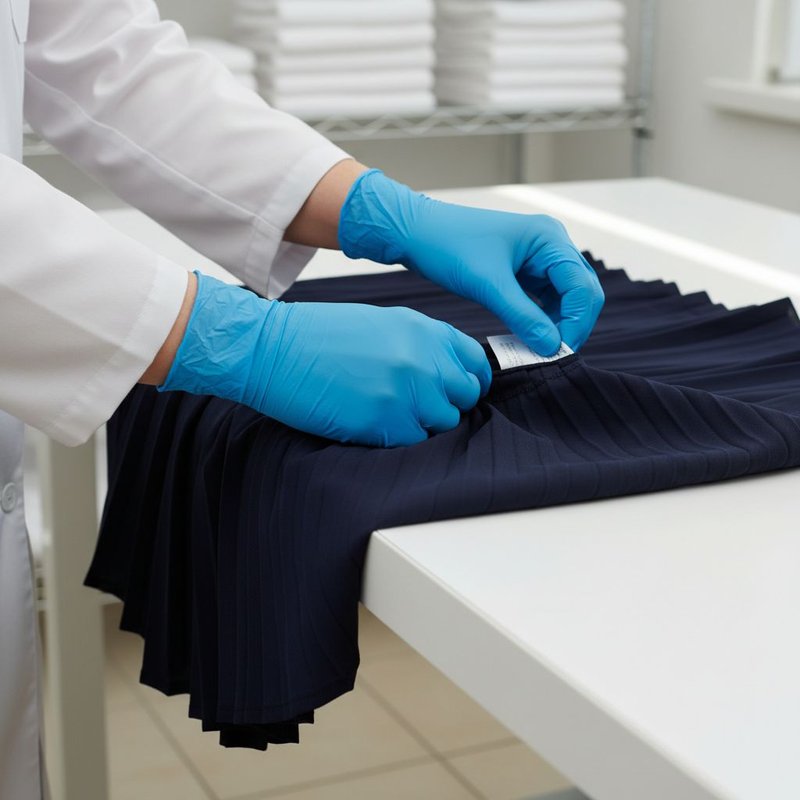
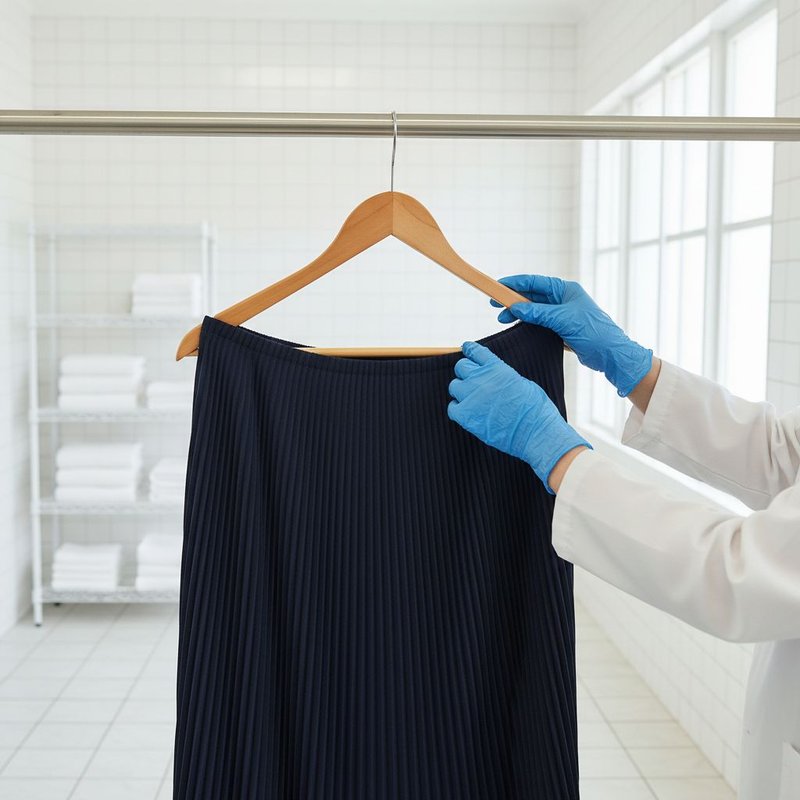
We read the label, identify the fabric, check the pleat type: heat-set or chemical. We assess the fabric condition, photograph stains and damage. Based on this, we select the washing method and temperature.
- Step 2
Pre-wash stain removal
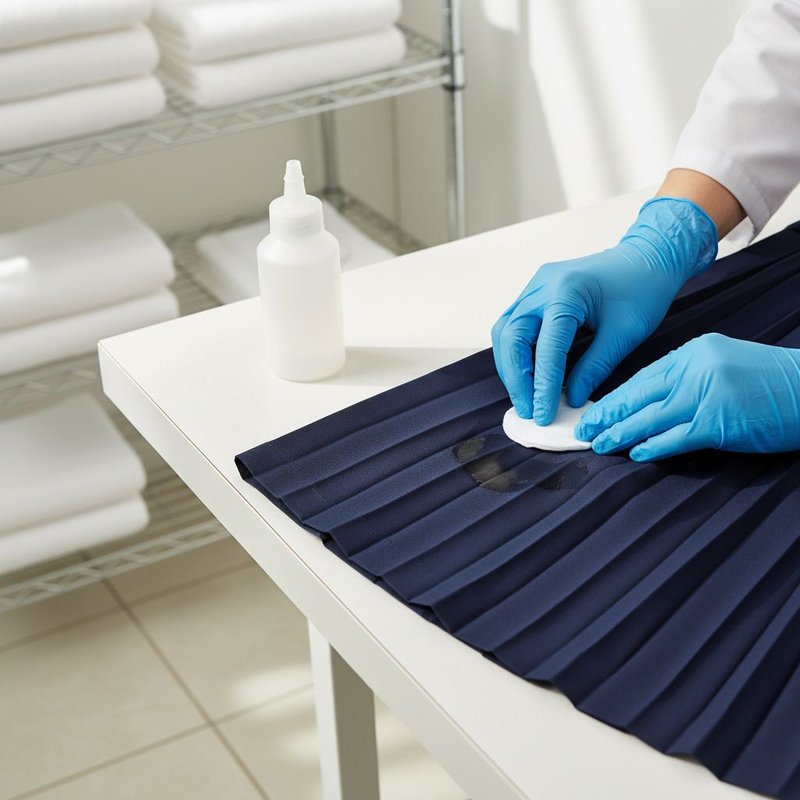
Coffee on the knee? Sweat on the waistband? Every stain needs a different enzyme: protease for protein, lipase for grease, citric acid for mineral deposits. Spot application, 15-30 minutes of dwell time. Silk and wool get gentler formulas.
- Step 3
Securing the pleats
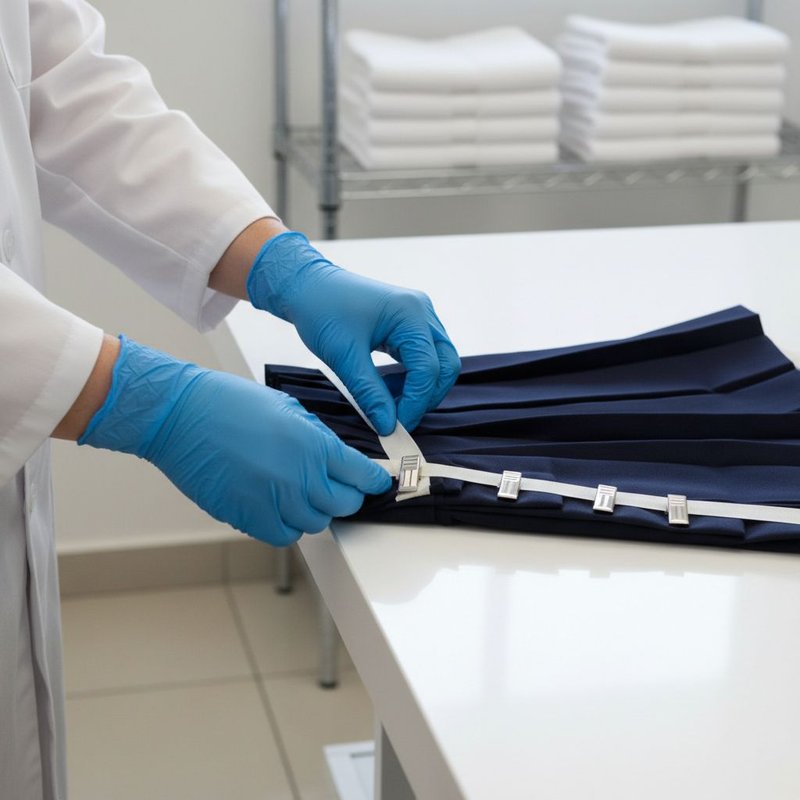
The key step that sets a professional laundry apart from a washing machine. We fold pleats lengthwise, roll them into a cylinder, and place them in a mesh bag with cotton tape every 10 cm. Or we layer with laundry tissue paper and secure with clips. The pleats don't shift a single millimetre.
- Step 4
Washing matched to the material
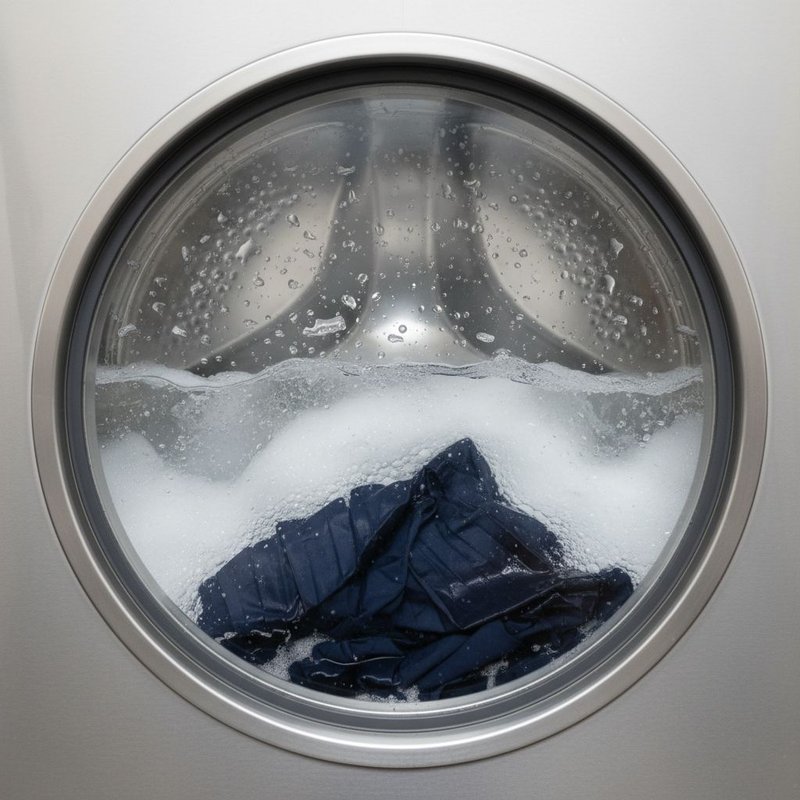
Silk: 20-25 degrees C, pH 5-7 detergent, max 400 RPM spin. Wool: 20-30 degrees C, protease-free detergent. Pleated synthetics: 30-40 degrees C with secured pleats. Every skirt gets its own programme: we don't guess, we know.
- Step 5
Drying with shape preservation
Wool skirts are dried flat with blocking to original dimensions: pinned with stainless steel pins every 3-5 cm. Pleated skirts hang vertically on clips with weights. Silk dries flat, away from sunlight. Pleat guards stay on until fully dry.
- Step 6
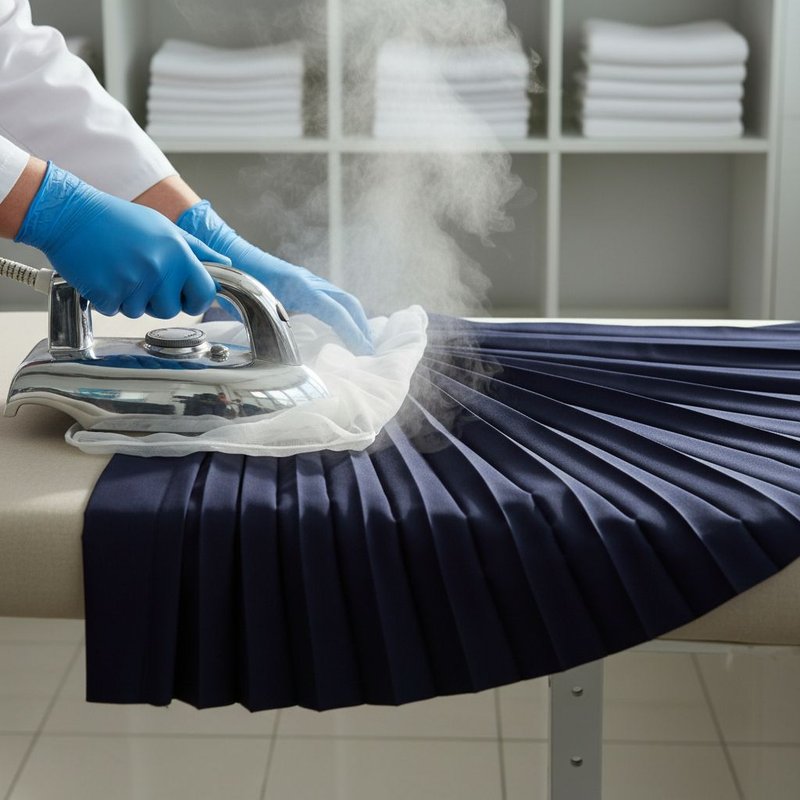
Pressing and pleat restoration
A pleating press with adjustable temperature and pressure. Each pleat is laid individually on the form. Saturated steam at 3-4 bar sets the pleat at the fibre-structure level. Silk is pressed on the reverse through organza. Wool is steamed with a lifted iron to prevent shine.
- Step 7
Quality control and packaging
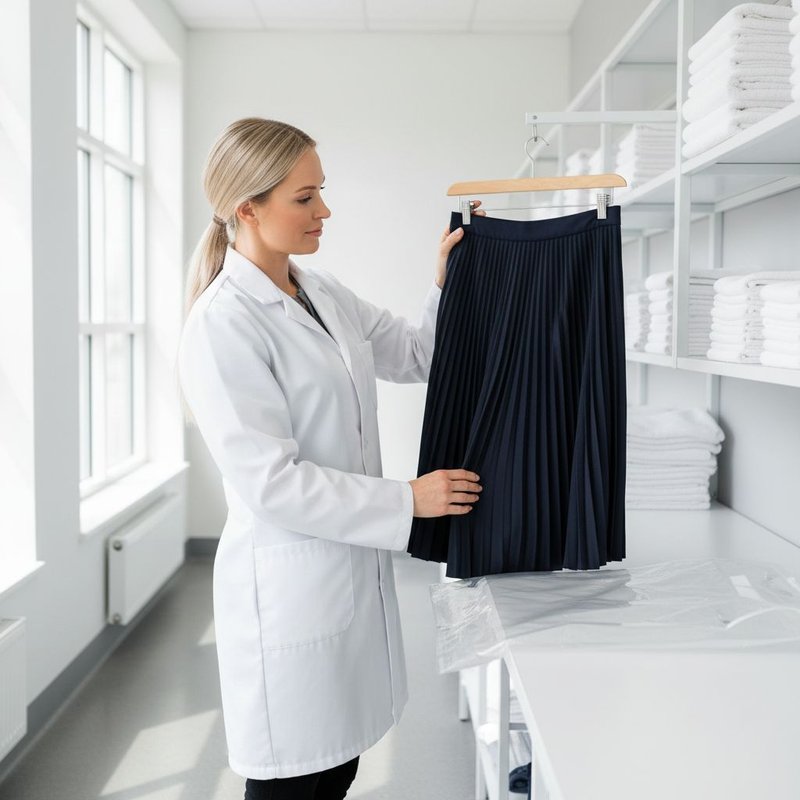
We check pleat sharpness, colour uniformity, lining fit, and completeness of buttons and hooks. The skirt goes on a profiled hanger with clips, in a protective garment bag. It comes back ready to wear.


Why customers bring their skirts here instead of risking it at home
3 things your bathroom washing machine can't do
We know what your skirt needs
Heat-set or chemical pleats? Natural or synthetic silk? Acetate or viscose lining? Every material reacts differently to temperature, detergent, and spin. We know this: we have a pleating press, not just an iron.
We pick up and deliver to your door
Work in central Lublin? We're at Wrońska 2. No time to stop by? Call: we'll come get the skirt and deliver it back clean. Your choice.
Quality guarantee on every skirt
If the pleats don't meet your expectations, we press again for free. If it's our fault, we refund your money. Our 4.9 Google rating didn't come from nowhere.
How much does skirt washing cost
Price depends on skirt type and material
from
60 PLNSimple skirt from 60 PLN. Pleated skirts are priced a little higher, see the full price list for details. Silk, wool: individual pricing.
See also our other services
What our customers say
Reviews from Google (4.9/5)
"I wear pencil skirts to court practically every day. I have three wool and two silk ones, all washed by Gorące Żelazko. They come back with a perfect crease, lining sitting like new. Two years ago I washed one myself in the machine. It shrank two sizes. I'll never make that mistake again."
"I have a pleated skirt from Massimo Dutti that I love. I was afraid to take it to a cleaner because another place had ruined the pleats on a different skirt before. Here, they asked right away whether the pleats were heat-set or chemical. I knew I was in the right hands. The skirt came back like it was straight from the store."
Frequently asked questions about skirt washing
The questions we hear most often - about pleats, wool, silk, price and turnaround.
Can you machine-wash a pleated skirt at home?
You can, but you're gambling with the pleats. Spinning above 400-600 RPM flattens them for good, and a home machine can't tell heat-set pleats from chemical ones. Often a pleated skirt comes back flat as a board. If you try at home, hand-wash in lukewarm water and hang it on clips to dry. We secure the pleats before washing, so they come back sharp.
How do I wash a wool skirt without shrinking it?
Wool felts in water above 30°C and with friction - the scales on the fibres open and lock together permanently. A size M skirt becomes an XS and nothing brings it back. At home: cold water, gentle wool detergent, no spinning, dry flat. We wash at a controlled temperature and reshape the skirt to its original measurements, so the size stays exactly where it was.
How much does skirt washing cost in Lublin?
A simple skirt starts from 60 PLN. Pleated, silk and wool skirts are priced individually after we see them - because the fabric and condition decide the price, not the cut. We quote the final amount upfront, before we touch anything, so there are no surprises at pickup. You'll find the full price list on our site.
How long does skirt washing take?
A skirt is normally ready in 48 hours. If you have a wedding or an important meeting coming up, we have a 24h express option. We also offer pickup and delivery across Lublin, and we're used to English-speaking customers, so dropping off is simple. We tell you the deadline when you drop off and we stick to it.
Do you wash silk skirts?
Yes, and it's one of the things a home machine can't do safely. Silk has a pH of 4-5, while regular detergent sits at 9-10 - that gap washes out the colour and leaves water rings. We wash silk in a mild, slightly acidic bath, at low temperature and almost no spin. The colour stays, and no water marks appear.
Do you secure the pleats before washing?
Yes - this is the step that separates a laundry from a washing machine. We fold the pleats lengthwise, roll them, and tie them with cotton tape or layer them with laundry paper so they don't shift a millimetre. After washing we restore them on a pleating press. The skirt comes back with pleats sharp as the day you bought it, not flat as a board.
Drop off the skirt. Pick it up stress-free.
Call +48 503 400 206 or stop by at Wrońska 2 in Lublin. We'll secure the pleats, wash at the right temperature, and restore the shape. You just put it on.