

Professional cleaning
A vest is the detail that says it all
Suit vest, down vest, knit vest: each has its own rules. We know them. Professional vest cleaning in the heart of Lublin.
A three-piece suit impresses. A dirty vest – also makes an impression
You know the feeling. You get up in the morning, put on your shirt, vest, jacket, and suddenly you spot a stain on the front of the vest. Or you notice the lining has gone stiff after the last home wash. Or the down in your puffer vest has clumped into hard lumps and the whole thing looks like a rag.
The problem with vests is that they look simple. A small piece of fabric, what's there to wash? But underneath: fusible interfacing, acetate viscose lining, bone buttons, stiffeners that come unglued at 45 degrees. Or 90/10 goose down that loses 90% of its insulation if you get it wet the wrong way. A vest is a landmine: simple on the outside, complicated on the inside.
Last updated:
What a home washing machine does to vests
Bubbling and puckering on the front
A suit vest has fusible interfacing that holds its shape. Temperatures above 40°C and spinning can cause it to separate from the fabric. The result: bubbles on the front, and having a tailor redo the interfacing usually costs more than a new vest.
Down clumped into lumps
Regular detergent with enzymes weakens the natural oils in down, but clumps mainly form when drying is too fast or incomplete. Down can clump into hard lumps, and the vest loses a good deal of its warmth. It can usually be broken up, for example by tumble-drying with tennis balls, but improper drying can also lead to mould within a few days.
A vest that lost its shape
Knit wool can stretch significantly under its own weight when wet. Hang-drying encourages stretching: shoulders can droop, the neckline can sag, and size M can start to look like L. A suit vest behaves the opposite way, it can shrink in water that's too hot.
That's exactly why vests end up with us. We know what fusible interfacing is, how goose down behaves at 30 degrees, and why you never hang a knit vest. You drop it off, you pick it up in perfect shape.
How we clean vests
6 steps tailored to the vest type
- Step 1
Inspection and material classification
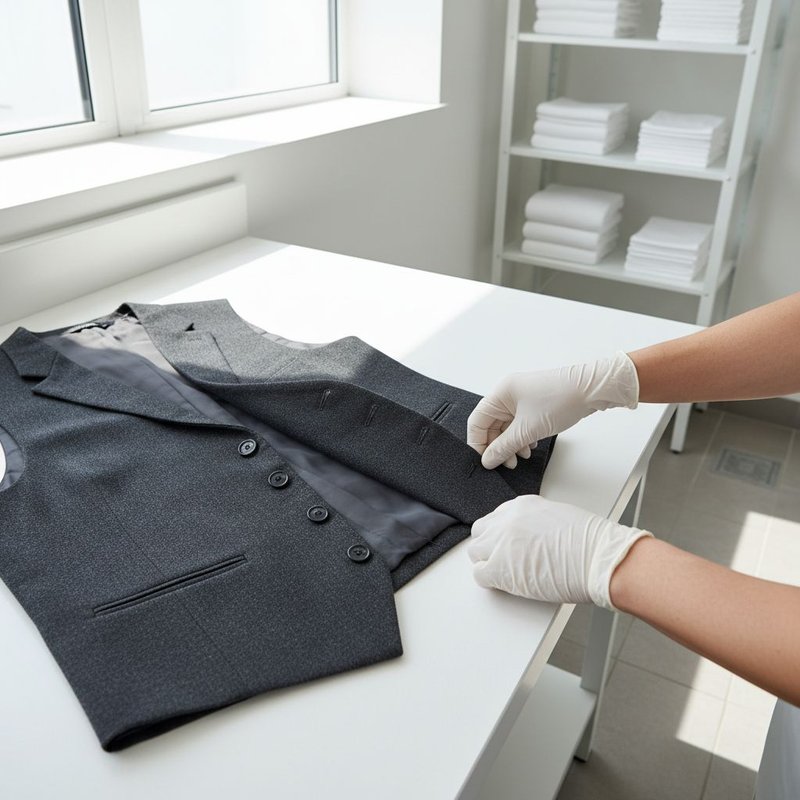
We check the composition, lining type, button type, and whether there's fusible interfacing. We test dye fastness on a hidden seam. We assess the overall material condition and select the right cleaning method.
- Step 2
Spot stain removal
Yellow stains on the lining? Sodium perborate. Grease from dinner? Glycol solvent applied from the outside in. Wine? Citric acid with hydrogen peroxide. Every stain gets its own formula.

- Step 3
Cleaning matched to the vest type
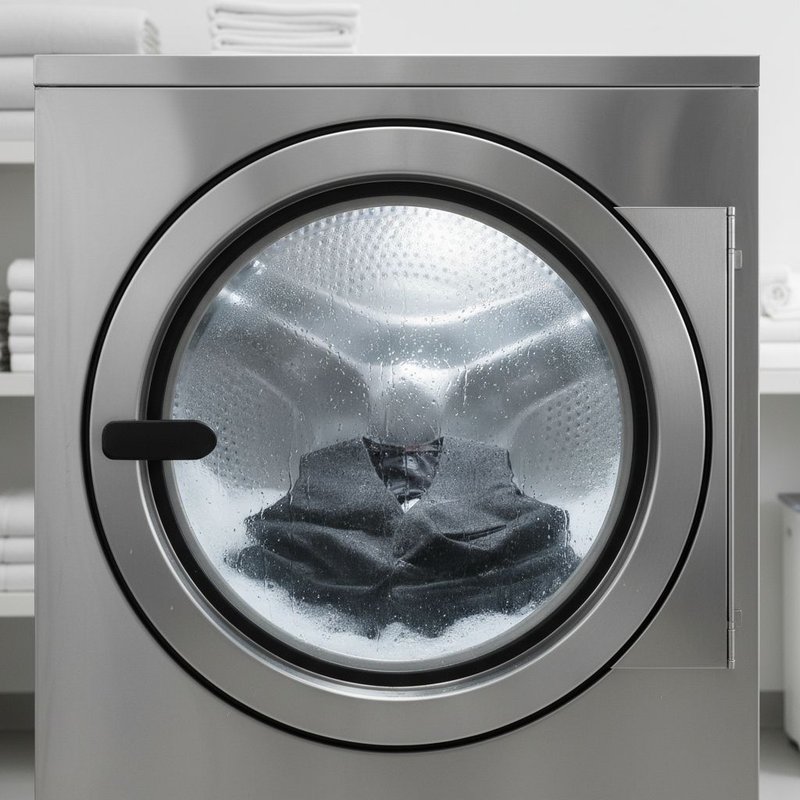
Wool suit vest: dry cleaning or wet cleaning at 25-30°C. Knit vest: 20-25°C in a mesh bag, spin max 400 RPM. Down vest: dedicated enzyme-free detergent, 30°C, extra rinse cycle.
- Step 4
Controlled drying
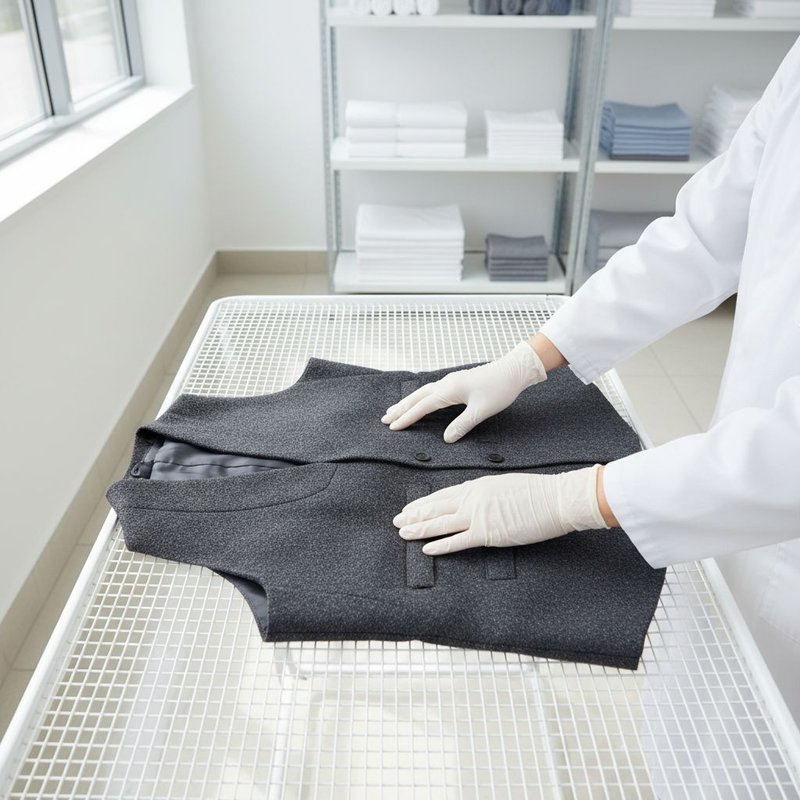
Suit vest: on a flat form, max 40°C. Knit: flat only, hand-shaped back to pre-wash dimensions. Down: in a tumble dryer with tennis balls for 60-90 minutes, with pauses to break up clumps.
- Step 5
Pressing and shaping
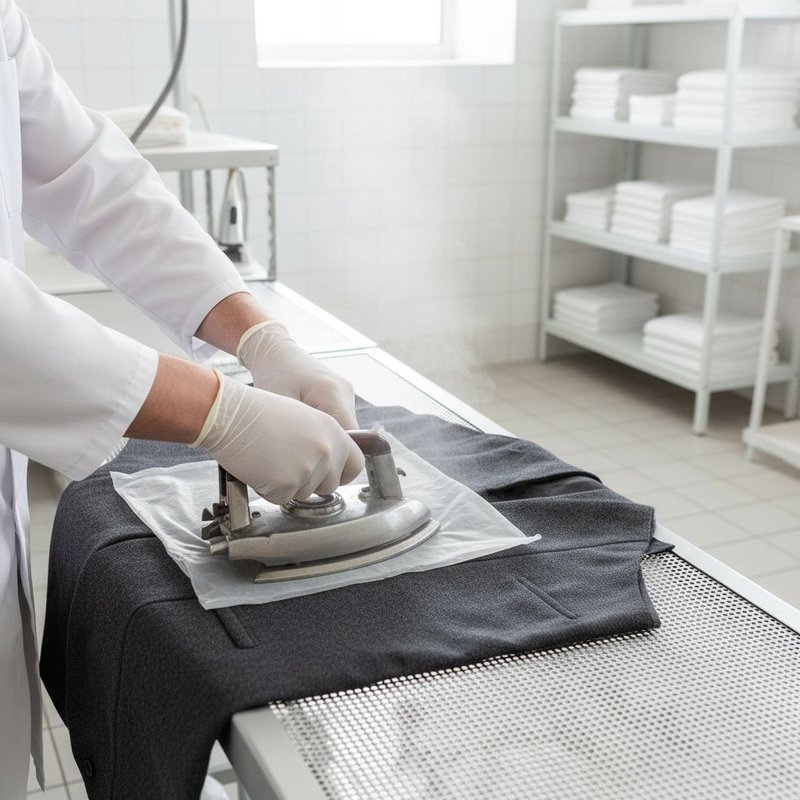
Suit vests are pressed on a pneumatic press through a protective cloth: 5-8 seconds per section so the wool doesn't develop shine. Finishing on a steam mannequin restores the 3D shape. Knit vests get steamed without contact only.
- Step 6
Quality control and packaging
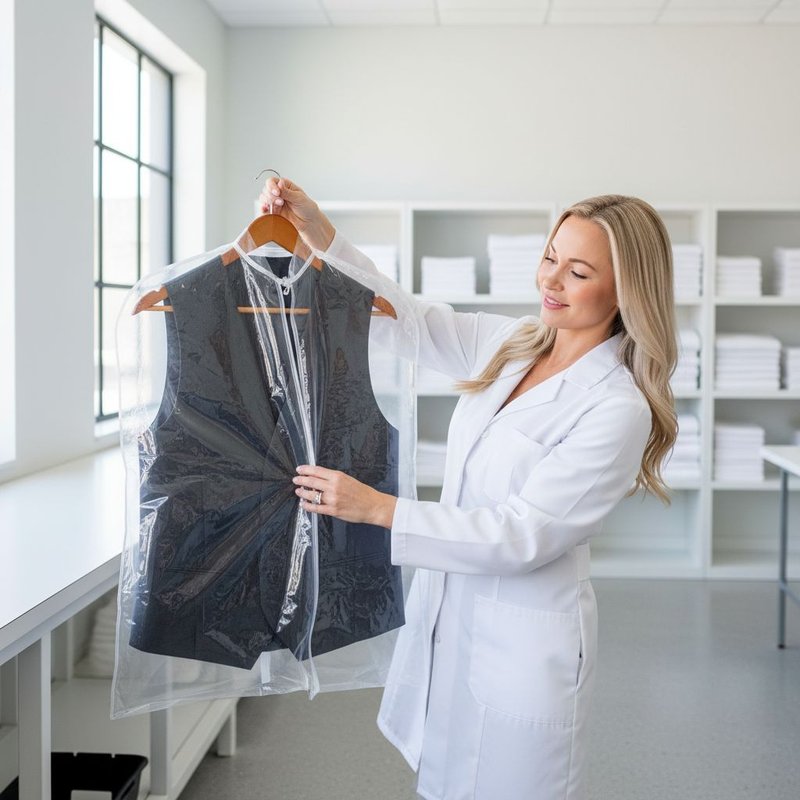
We check the buttons, evaluate colour under daylight, and inspect cleanliness and fabric texture. Suit vests go back on a hanger in a garment bag. Knit vests are folded in tissue paper. Down vests go loosely in a breathable cover.


Why customers bring us their vests
4 reasons to hand it over instead of risking it
We see the construction, not just 'a piece of fabric'
Fusible interfacing, acetate lining, bone buttons, 90/10 goose down, worsted wool: for us these aren't just label tags, they're decisions about the cleaning method. Every vest type, suit, down, knit, requires a different approach.
Drop off the vest. Stop googling 'how to wash'.
Instead of studying labels, hunting for mesh bags and tennis balls, reading forums about whether wool can handle 30 degrees, just come to Wrońska 2. Drop it off and forget about it.
We pick up and deliver in Lublin
You don't have to come to us. Call: we'll pick up the vest, bring it back clean. And if you're near the courts, government offices, or downtown office buildings, we're a 5-minute walk away.
Guaranteed to come back the way it was. Or better.
We measure dimensions before and after. We check buttons, colour, texture. If something's off, we fix it at our expense. Our 4.9 Google rating is the result of this approach.
How much does vest cleaning cost
Price depends on vest type and material
from
25 PLNSuit vest, knit vest, or down vest. Leather, suede, or heavily stained vests: individual pricing.
See also our other services
What our customers say
Reviews from Google (4.9/5)
"I wear a three-piece suit to court every day. I bring my wool vest here every two weeks: it comes back perfectly pressed, buttons in place, lining like new. My wife once washed one at home. The interfacing came undone and it ended up in the trash. Since then, only Gorące Żelazko."
"I bought a suit vest to wear solo, without the jacket. That's the trend. The problem is every stain is visible. I brought it in with a coffee stain on light wool. They returned it spotless, smelling fresh, perfectly fitted. For 25 PLN? That's nothing compared to the price of a vest from Lavard."
Frequently asked questions about vest cleaning
The questions we hear most - about interfacing, down, wool, price, and pickup.
Can I wash a suit vest in a home machine?
Better not. A suit vest has fusible interfacing inside that holds its shape - above 40°C and under spinning it separates from the fabric, leaving bubbles on the front that can't be fixed. Having a tailor redo the interfacing costs more than a new vest. We clean it dry or by wet cleaning at a low temperature and reshape it on a steam mannequin.
How do I wash a down vest so the down doesn't clump?
Down clumps when it meets enzyme detergent that strips its natural oils, and when it's hang-dried - within two days you can even get mould. We wash down vests with a dedicated enzyme-free detergent and an extra rinse, then dry them in a tumble dryer with balls that break up the lumps. The down regains its loft and keeps you warm again.
How much does vest cleaning cost?
Vest cleaning starts from 25 PLN - the price depends on type and material. Suit, knit, and down vests are three different processes, and difficult stains are priced individually. We give the exact price after seeing it, with no surprises at pickup. It's usually a fraction of the price of a new vest. The full list is in our price list.
Do you speak English, and can you pick up the vest?
Yes - you can arrange it all in English, no Polish needed. We also offer pickup and delivery across Lublin: call us, we'll collect the vest from your home or office and bring it back clean, reshaped, and ready to wear. You can also drop it off in person at ul. Wrońska 2 if you're nearby.
Will a knit vest stretch or shrink?
Not when it's handled properly. Wet knit stretches up to tens of percent under its own weight, so we never hang it - we dry it flat only, hand-shaped back to its pre-wash dimensions. Wool suit vests, on the other hand, shrink in water that's too hot, so we wash them cool. We measure the dimensions before and after.
I wear my vest solo - can you remove a stain from light wool?
Yes, that's our bread and butter. Worn without a jacket, every stain on a vest is on show, and light wool is the least forgiving. We spot-treat it, matching the formula to the stain - grease, coffee, and wine each need a different approach - and always test colour fastness on a hidden seam first, so we never leave a lightened mark.
Your vest is in good hands
Call +48 503 400 206 or stop by at Wrońska 2 in Lublin. Suit vest, down vest, knit vest: we clean each one the way the material demands.